Wat Lao Buddharam
2026 Event Calendar
ປະຕິທິນວັດ
September 13, 2026
Boun Khao Padabdine
Ancestor Day
September 13, 2026
The 14th day of the waning moon of the ninth month of Buddhist calendar, all Laotians annually celebrate the feast of Ho Khao Padabdine, the "Day of the Dead". That day, the Buddhist make a donation to the death, in the form of food delivered to them symbolically through the monks ...
Ho Khao Padapdine means’’ to packets of rice and place them on the floor’’.
According to the precepts of Buddha, the Buddhist Lent is the good time to refrain from bad deeds. Buddhist should apply the Dharma: the respect of the five commandments of the Buddha, meditation and alms. It is also time to complete the agricultural work, as transplanting of paddy.
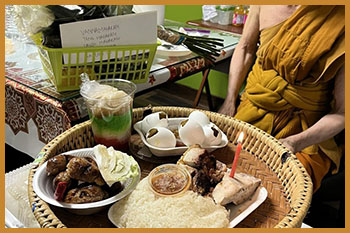
To celebrate the Boun Khao Padabdine Ho, the Buddhist are preparing offerings composed of Tomh Khao, Khao Nom Neb (cakes made with rice), fruits and other kind of foods that will be offered to monks . These religious activities are intended to honor the dead and the spirits.
September 27, 2026 - Sunday
Boun Khao Salak
September 27, 2026
Boun Khao Salak, 15 days after Boun Khao Padap Din, ritual ceremonies happens in the same way except for one thing. This time people number the offerings, and the monks will draw them. Each monk receive also in this manner a list of people to pray for (listing the names of the dead persons the family wishes to honor).
Basic necessities such as soap, toothpaste and, toothbrushes compose the offering this time. Boun Khao Salak helps people to go throught this time of penance. It also marks the entrance in the second half of the Buddhist Lent. This simplicity in life will end with the festival of Boun Ok Phansa.
Read More About Boun Khao Salak
November 1, 2026 - Sunday
Boun Ork Phansa
Buddhist Lent Ends
November 1, 2026
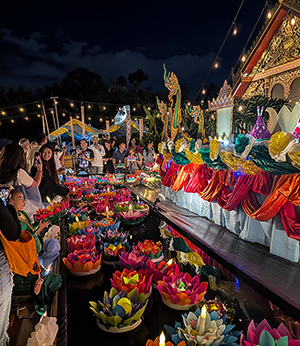
Boun Ok Phansa - also Ork Phansa, marks Buddha's return to earth and signifies the end of Buddhist Lent when after three months of retreat, the monks return to their daily social activities. At dawn of Boun Ok Phansa, followers gather at temples across Lao to give donations and offerings. In the evening, beautiful candlelit processions are held at the temples and hundreds of colourful floats of flowers, incense and candles float down the Mekong River. To prepare for the celebration, families make a small round container to put candles, flowers, incense or food and money.
At the bank of the Mekong, they then light the candles, say prayers and send the boat of light floating away down the river. This tradition is observed to pay respect to the river spirits, especially the Mekong River which means Mother of All Things. People also believe that this is a way to send away all negativity such as sickness, bad luck, shortcoming, and failure.
The end of Buddhist Lent is also celebrated with fabulous boat races along the Mekong River in Vientiane.
Read More About Boun Ork PhansaThe Legend of Phou Thao and Phou Nang
November 15, 2026 - Sunday
Boun Maha Katin
Monks Robes Festival
November 15, 2026
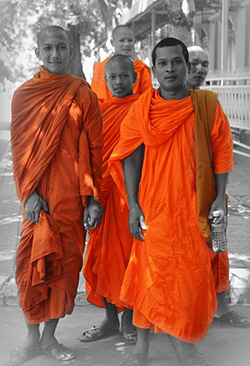
Maha Katin, also Thot Kathin celebrates the end of the Buddhist Lent and a replenishment of the temple monks. Buddhist monks throughout the country are free to move from place to place and are eligible to receive new robes in an annual presentation ceremony called ”Thot Kathin“. Beside new robes, Buddhist literature, kitchen equipment, financial contributions and building materials e.g. nails, hand-saws and hammers etc. are also presented to monks on this occasion.
The word ” Thot” means “making an offering to the monk” and the word “Kathin” literary means the “embroider frame” used in sewing the yellow robes. Buddhists regard the “Thot Kathin” ceremony as a most significant form of merit-making.
November 22, 2026
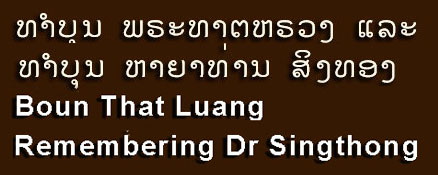
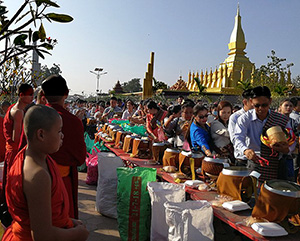
Boun That Luang
November 22, 2026
Pha That Luang – which literally means ‘great golden stupa’ – is said to have undergone many transformations over the years. Known as a Buddhist stupa nowadays – a hemispherical structure used as a place of meditation – Pha That Luang actually started life in the 1st century as a Hindu temple. In later years Buddhist missionaries and monks from India visited the stupa – the monks were said to have brought a breastbone of Lord Buddha as a relic. Pha That Luang festival is the scene of the country’s most important Buddhist festival, the Boun That Luang, held during the full moon of the 12th lunar month. Thousands of people flock to the grounds for three days of Buddhist ceremonies and celebrations to pay respect to the golden stupa and to give alms to hundreds of monks. Buddhist devotees walk around the That Luang three times holding incense sticks to pay their respect.
Remembering
Dr. Singthong Banlusack